

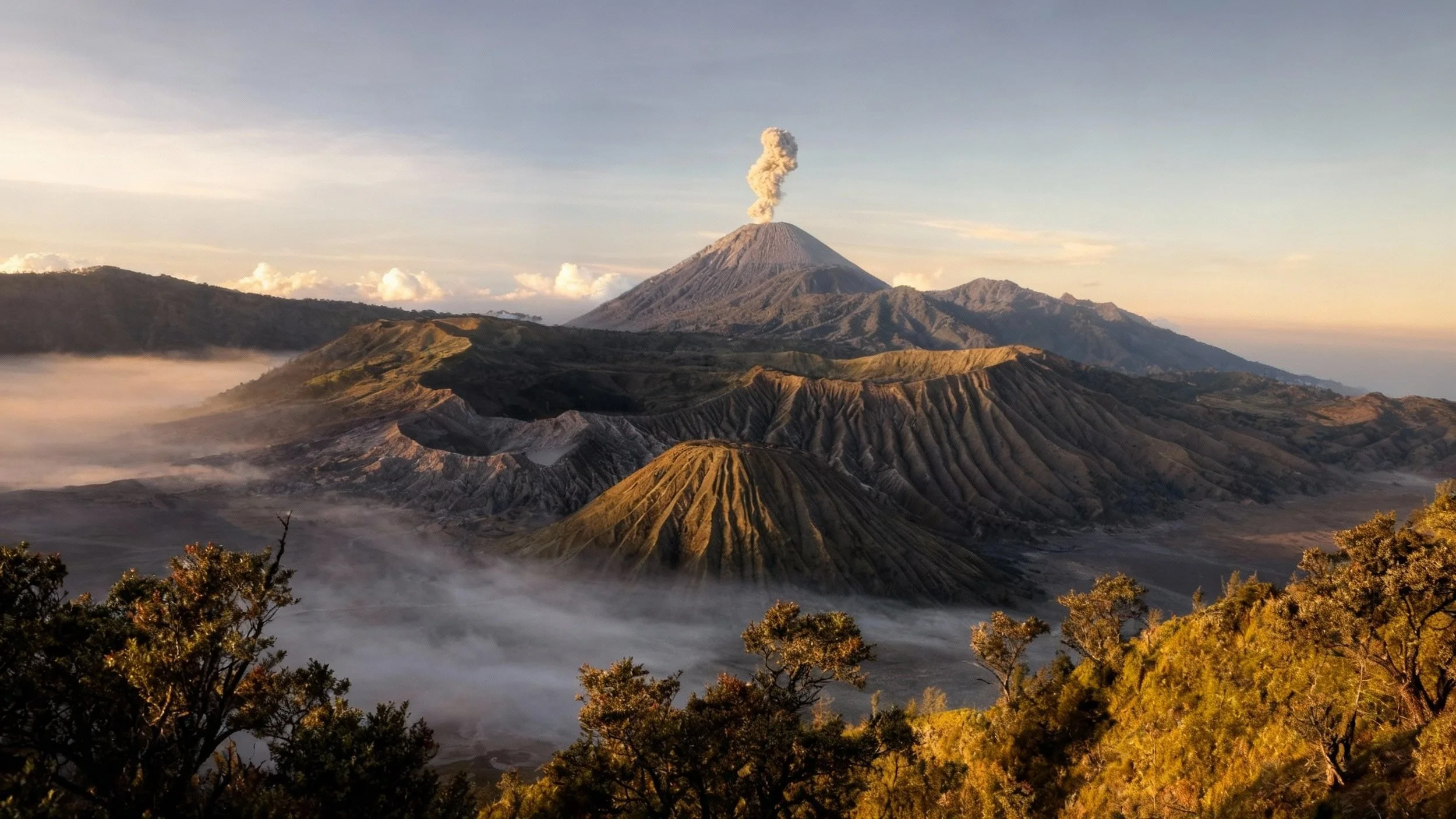
Where the islands shape the soul of cocoa
From volcano, rain, forest, and sun, the islands shape flavors found nowhere else on earth.
-
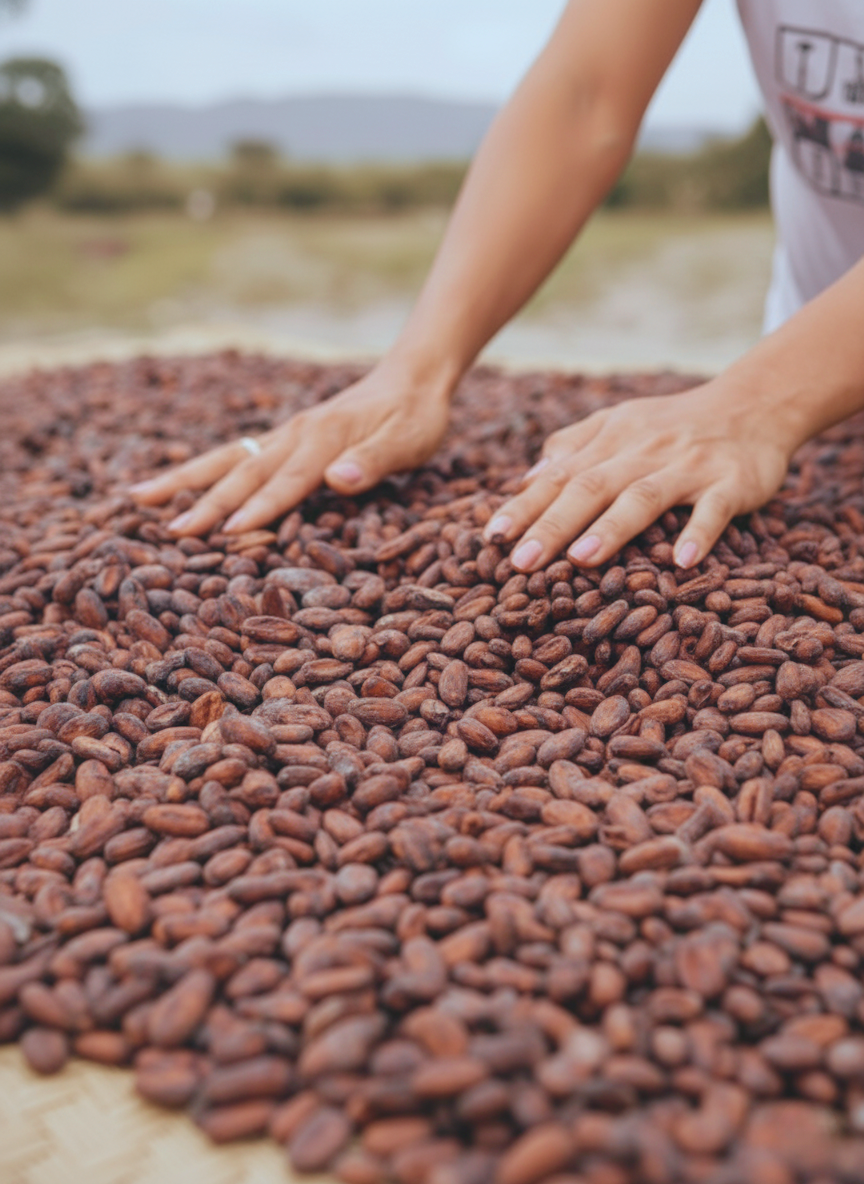
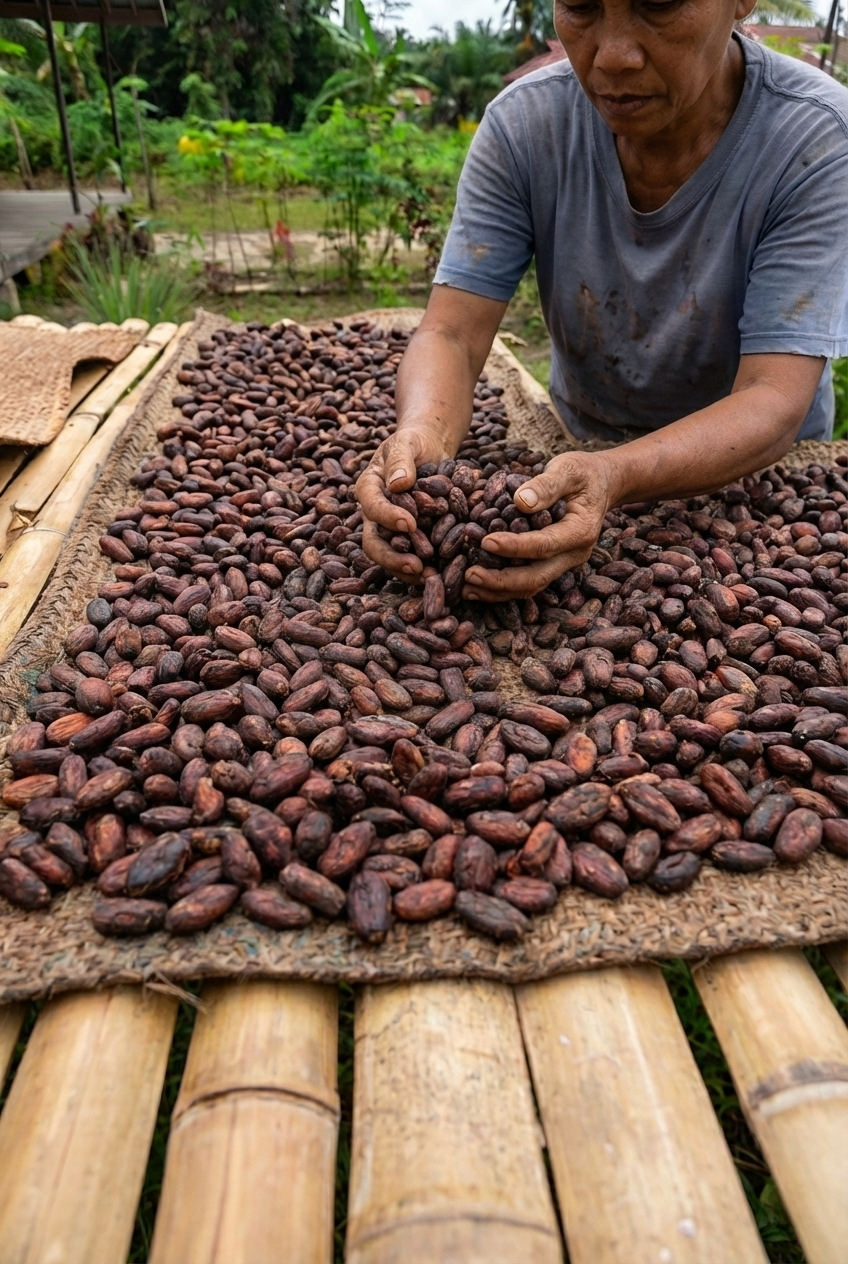
![Java origin Indonesia fermented cocoa beans being hand-sorted under warm volcanic light, highlighting their golden caramel hue and smoky clove character.]()
Java : Volcanic Majesty
Golden caramel, bright orange zest, warm smoke, soft clove finish.
Terroir
Forged on volcanic slopes where ash enriches the soil, Java cocoa carries the quiet fire of ancient mountains, cool mist, and mineral depth.People
Crafted by farmers who treat fermentation as a ritual of patience, every batch is guided by hands that have known cocoa for generations. -
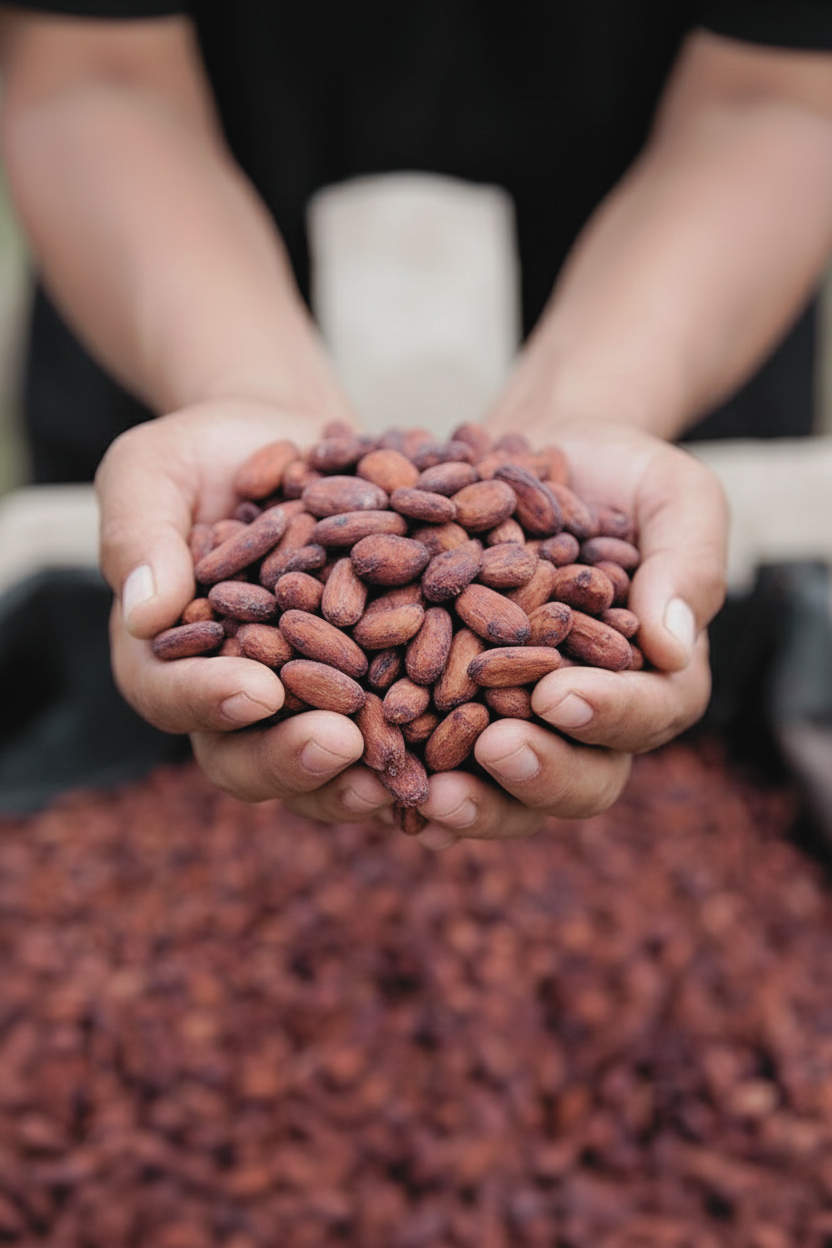
![Hands presenting Bali origin Indonesia fermented cocoa beans, showcasing their deep chocolate, dark fruit, and wine-like depth.]()
Bali : Sacred Isle
Deep chocolate, dark fruit, raisin and prune, wine-like finish.
Terroir
Born from warm coastal breezes and sunlit highlands, Bali cocoa is shaped by fertile valleys, rainforest moisture, and the soft sweetness of island air.People
Raised by smallholders who honor balance between land and spirit, Bali’s cocoa is cultivated with care, intention, and harmony. -
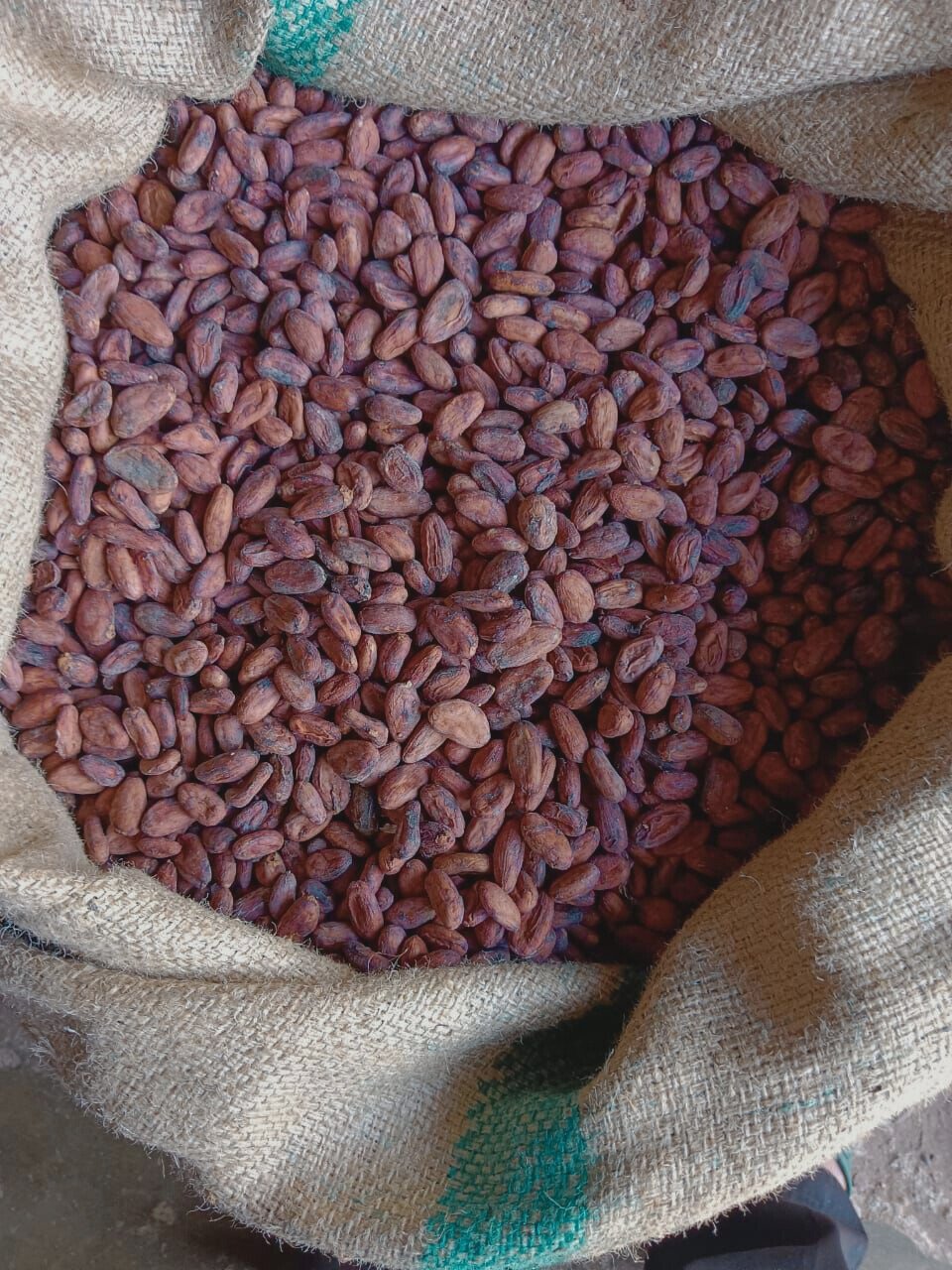
![East Nusa Tenggara origin fermented cocoa beans resting in an open jute sack, showcasing their grapefruit sharpness, sun-kissed apricot character, and warm bread finish.]()
East Nusa Tenggara : Highland Sun
Grapefruit sharpness, sun-kissed apricot, roasted banana, warm bread finish.
Terroir
From rugged hills and semi-arid highlands, this cocoa absorbs intense sunlight, cool winds, and the dry warmth that creates its bold, untamed profile.People
Grown by resilient communities who farm on steep terrains, their craftsmanship brings structured fermentation and a deep understanding of hardy cacao trees. -
![Hands presenting East Kalimantan Indonesia fermented cocoa beans, highlighting their dark fruit depth, dried Mokka character, and warm lingering rummy finish.]()
East Kalimantan Rainforest Depth
Dark fruit, dried Mokka, lingering rummy warmth.
Terroir
Rooted in dense tropical rainforests, Kalimantan cocoa draws its richness from deep soils, humid canopies, and evergreen biodiversity.People
Cultivated by farmers who work alongside the rhythm of the forest, their fermentation style reveals complexity, depth, and a slow tropical warmth.
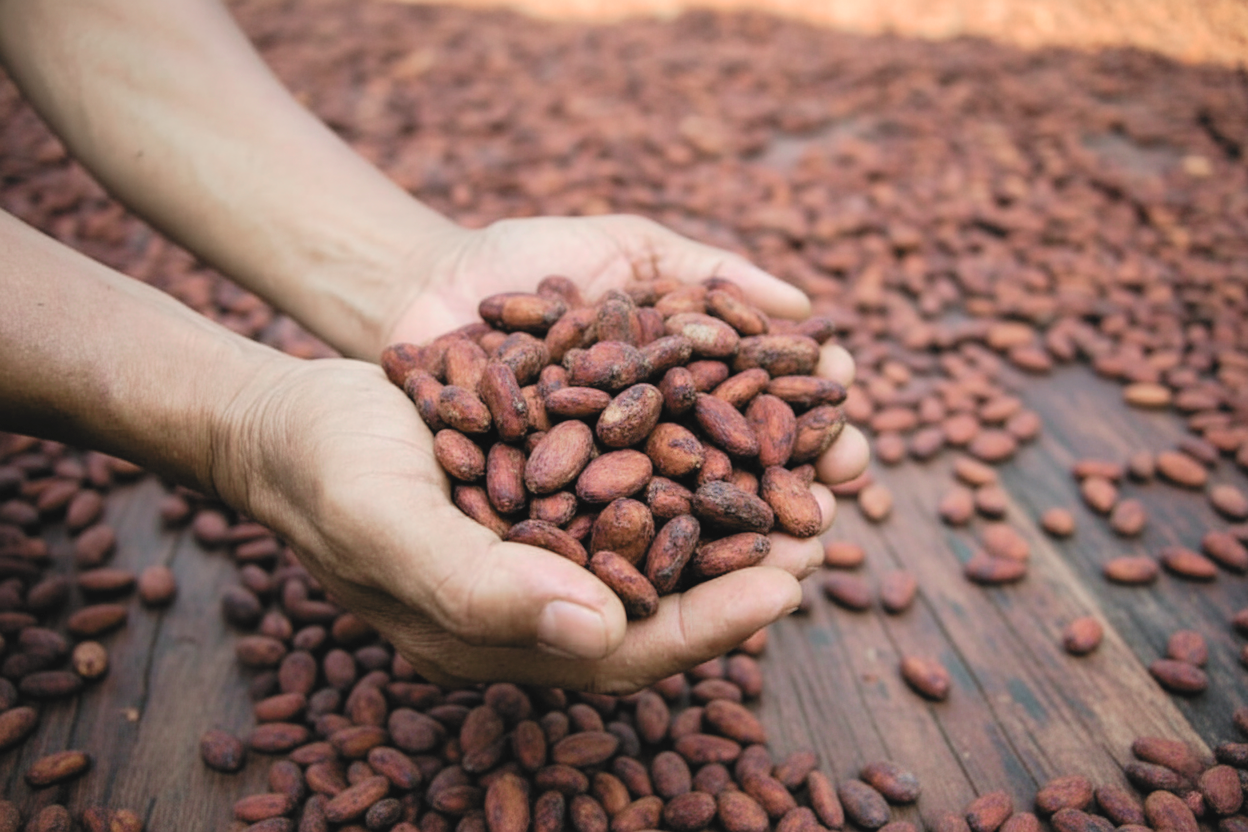
Java : Volcanic Majesty
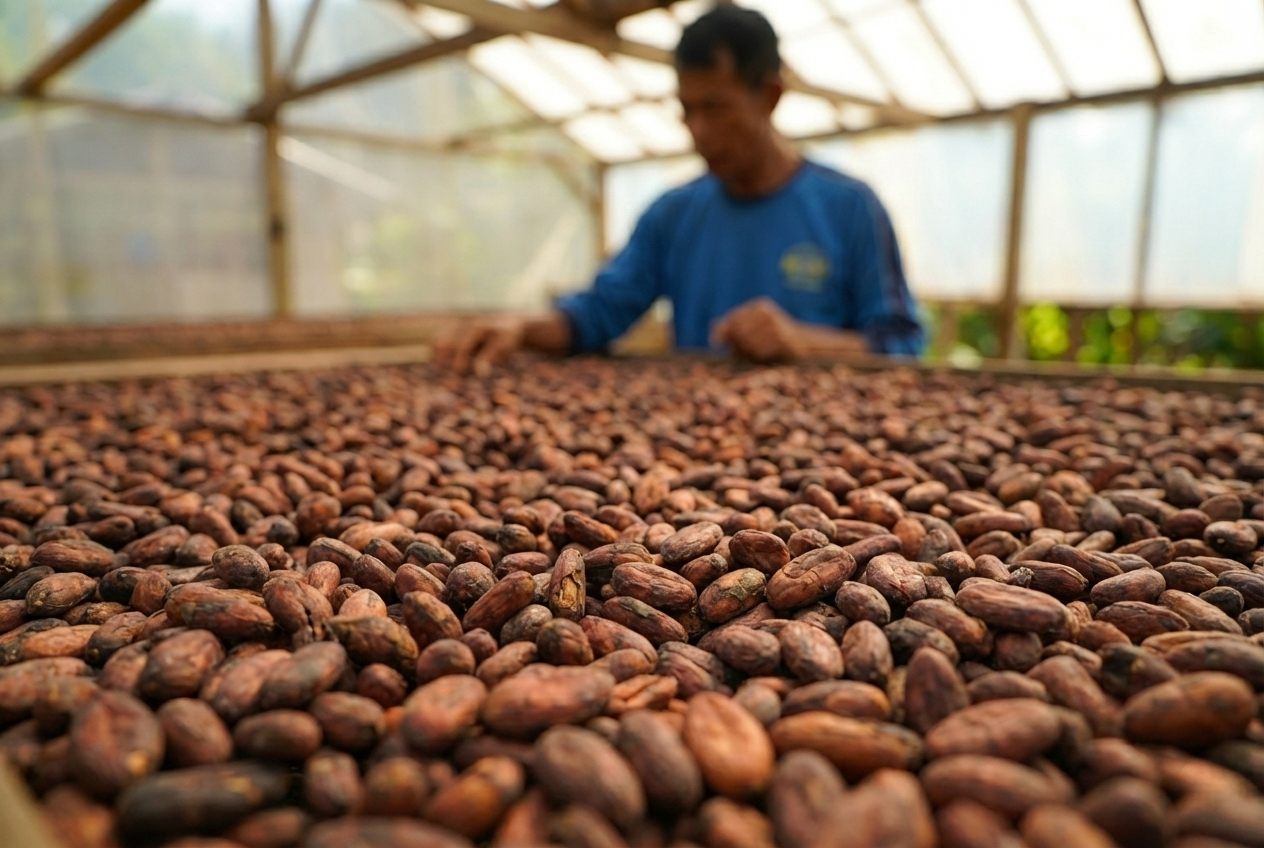
Flavor Profile:
Java's cocoa melts into golden layers of caramel, a volcanic depth, and soft spices. Its profile opens with vibrant acidity reminiscent of bright orange zest, followed by rich caramel warmth and roasted nutty tones. Gentle hints of warm smoke and clove linger on the finish, a result of traditional drying techniques over coconut husk fires. This interplay of brightness and rustic depth creates a nuanced cocoa that is both elegant and bold.
Terroir:
From the volcanic slopes of Central Java to the highland growing regions shaped by the Ring of Fire, Java’s terroir is forged by mineral-rich soils that nurture deep-rooted cacao trees. The island’s high humidity and shifting tropical patterns demand precision during drying, which is why farmers rely on controlled drying houses that stabilize airflow and temperature. These structures protect the beans from sudden climate swings while allowing slow, even dehydration that preserves their natural complexity. The result is a clean, consistent drying process guided by both science and inherited local wisdom, shaped by the fire and fog of Java’s highlands.
Community:
In Java, cocoa is more than a crop, it is a living part of rural heritage. Smallholder farmers, many of them second or third-generation caretakers, tend to mixed agroforestry plots where cacao grows beside banana, coconut, or clove. Across Java’s farming communities, knowledge is shared, fermentation techniques are refined, and collective skill continues to evolve through time. Here, heritage meets innovation, and every batch of cocoa becomes a quiet testimony to shared resilience and the spirit of the island.
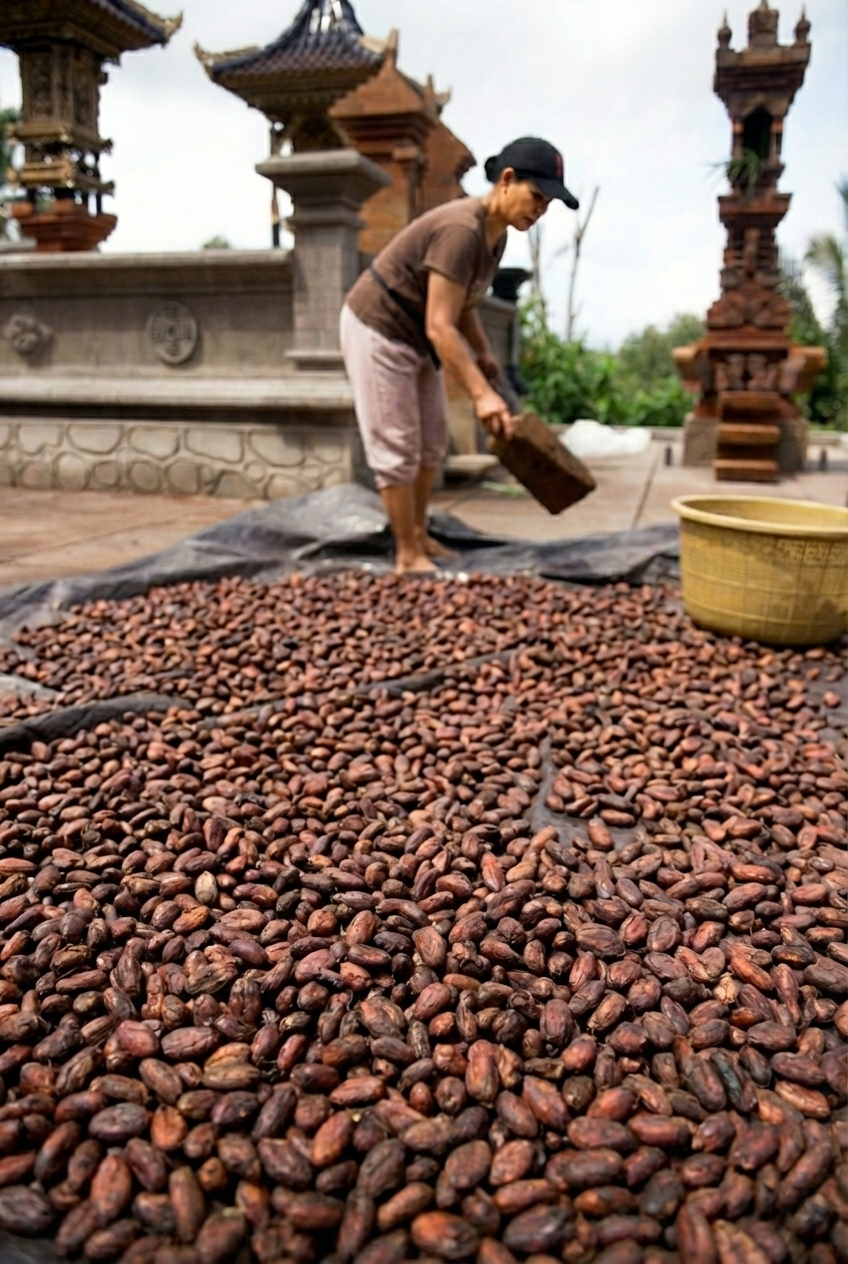
Bali : Sacred Isle
Flavor Profile:
Deep and full-bodied, Bali's cocoa emerges from volcanic soil with weight, structure, and shadow. It opens with rich layered chocolate that settles into the dense sweetness of dark fruit, slowly unfolding into notes of raisin and prune. A long, wine-like finish closes the experience, carrying the complexity of the island it was born from. This is not a cocoa of brightness but of depth, a slow revelation that asks you to linger, taste, and return.
Community:
On our Bali farms, growers are reclaiming pride in their cacao through small-scale, chemical-free cultivation rooted in generational knowledge. The work is guided by time-honed practices and the rhythms of the land, with fermentation and drying refined through years of shared learning and craft-focused discipline. This quiet resurgence has lifted Balinese cacao from obscurity to recognition, carried by a deep respect for nature and the island's artisanal heritage.
Terroir:
Nestled between volcanic ridges and terraced valleys, Bali's cocoa grows in mineral-rich soils shaped by the island's ancient mountains and tropical climate. Steady rainfall and a dense forest canopy nurture cacao trees within diverse agroforestry systems, rooted beside coffee, clove, and fruit trees. Volcanic earth, deep sediment, and the slow rhythms of the island give rise to beans with structure and weight, beans that carry the soul of the land they come from.
East Nusa Tenggara : Highland Sun
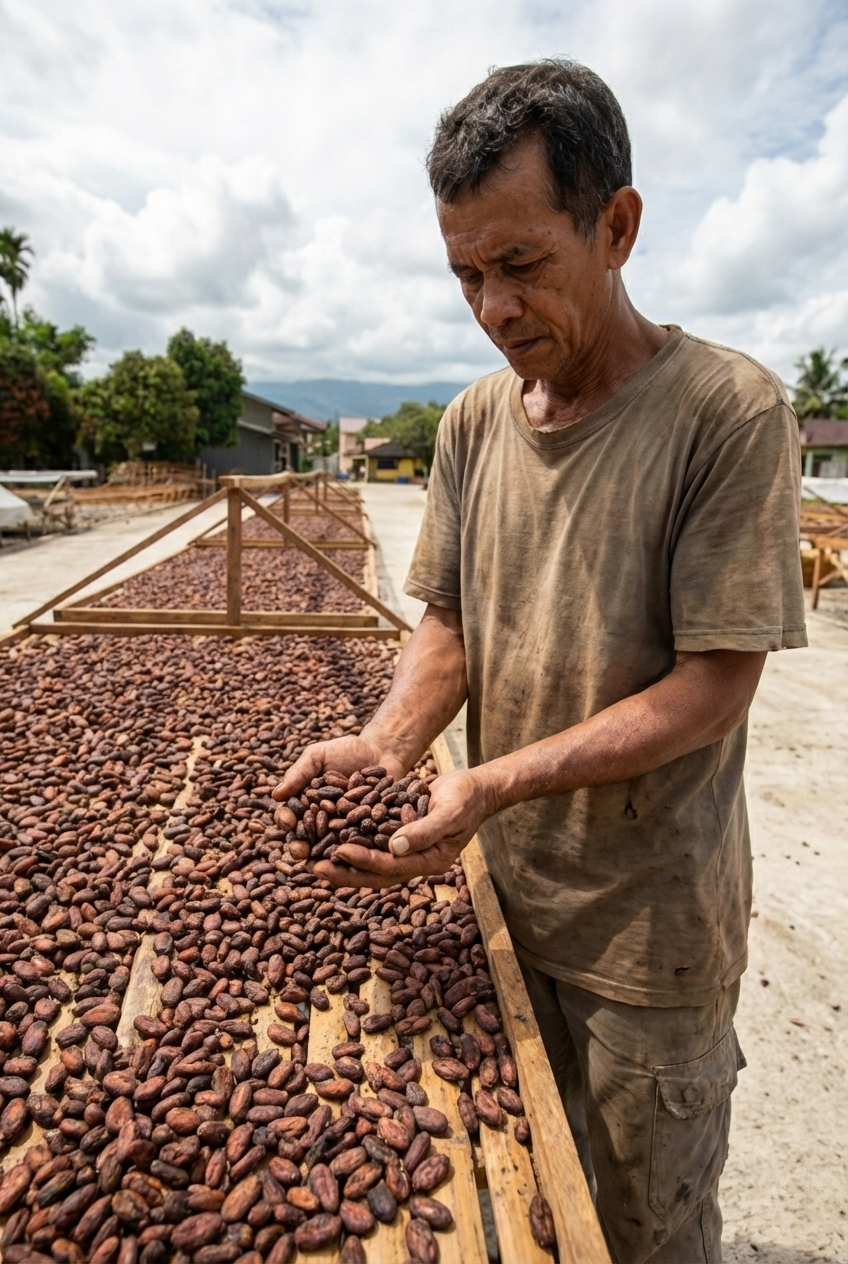
Flavor Profile:
Cocoa from the highlands of East Nusa Tenggara is bold and expressive. It opens with a bright citrus sharpness, akin to grapefruit or tamarind, then rounds into dried apricot, roasted banana, and a warm toasted bread finish. The contrast between brightness and warmth creates a vibrant, layered profile that reveals complexity with every taste.
Terroir:
East Nusa Tenggara's rugged terrain, semi-arid climate, and unique geology set it apart. Its cocoa grows in a dry highland savanna where hot days, cool nights, and limestone-rich soil create a stress-resilient cacao tree that concentrates flavor. The scarcity of rain and seasonal wind exposure force slow, concentrated growth, translating into intensity in the bean. This is a terroir of contrasts, where elemental forces carve out bold, resilient flavors that feel both ancient and alive.
Community:
Farming in the highlands of East Nusa Tenggara is defined by community resilience and ancestral tradition. Cocoa is cultivated in steep, terraced plots, often by extended families working side by side across generations. Farmers dry beans under open sun and ferment them in wooden crates lined with woven palm leaves, carrying forward techniques shaped by their landscape.
Local initiatives and community-driven programs have helped elevate farming capacity, strengthening fermentation standards and expanding women's roles in post-harvest craftsmanship. East Nusa Tenggara's cocoa is a story of transformation, born of hardship, guided by heritage, and now rising with quiet purpose.
East Kalimantan : Rainforest Depth
Community:
Cocoa farming in Kalimantan is growing among Dayak communities and transmigrant settlers who blend indigenous knowledge with modern practices. These farmers often rely on wild-garden cacao or reforestation plots. NGOs and sustainability programs are helping to improve post-harvest practices, with fermentation boxes and solar drying domes becoming more common. The region's remoteness demands resilience, and its cocoa reflects this, deep, grounded, and powerful.
Terroir:
The rainforests of East Kalimantan form a humid, biodiverse enclave that shapes this origin’s identity. Towering dipterocarps, peat rich soil, and high annual rainfall create a unique ecosystem where cacao trees coexist with native flora and fauna, absorbing the rainforest’s complexity into their beans. These conditions produce flavors that are dense, brooding, and evocative of the untamed wilderness.
Flavor Profile:
East Kalimantan cocoa reveals a dark, full-bodied character with a rummy warmth and deep forest sweetness. Notes of dried fruit, mokka, and toasted spices unfold slowly, offering a lingering richness. The cocoa here is earthy and bold, shaped by the dense rainforest and tropical mist.
What shapes a great cocoa?
It begins not in the factory, but in the forest. Not with machines, but with the hands of farmers, the whisper of wind through cacao leaves, the quiet heat of fermentation. Behind every origin lies a ritual, one that transforms raw nature into timeless flavor. Now that you've met the lands, meet the soul of how we craft them.