

From village harvest to volcanic fermentation, from drying decks to the roaster drum, every step is a ritual that protects flavor, purity, and soul
Where rituals turn raw fruit into true cocoa
The Magic Hands That Shape the Origin.
Have you ever wondered why true craft cocoa always begins far before fermentation?
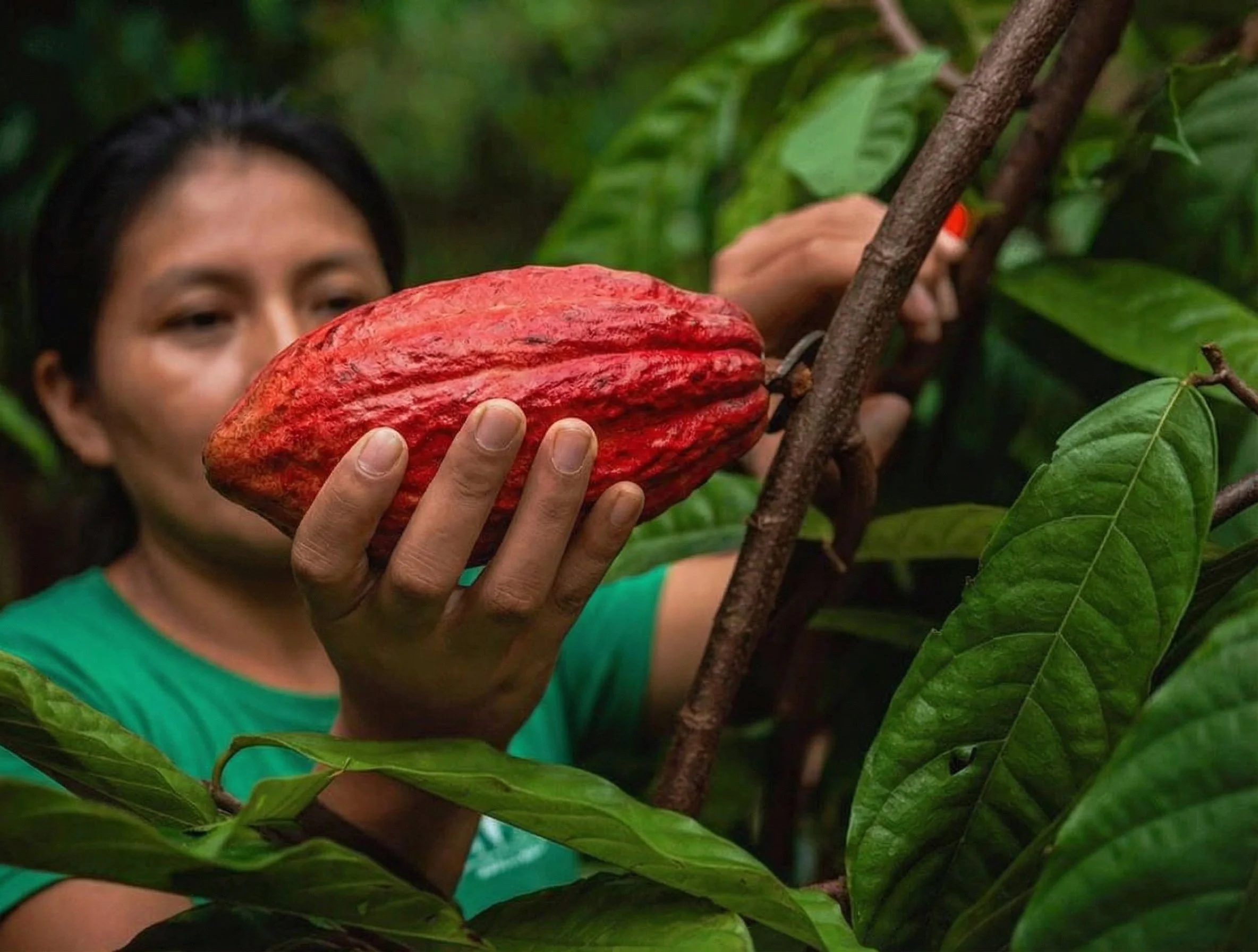
At Angkassa, the origin is shaped long before the box, long before the pulp turns warm, long before the aroma awakens. It begins in the hands that choose the fruit. Our farmers do not harvest by season, they harvest by signal, the tension of the stem, the shift of color, the quiet aroma rising beneath the husk. Each pod is cut with a slim blade at the exact angle that protects the tree for future seasons. Nothing rushed, nothing forced, everything intentional.
Once collected, every pod is examined one by one under natural light. Imperfections are not allowed to pass. Pods bruised by insects, those with uneven ripeness, or skins that lack firmness are respectfully removed from the ritual. Only fruit with full-bodied flesh and healthy weight move forward. This is not about quantity, this is about destiny. A great cocoa story can only begin with disciplined selection.
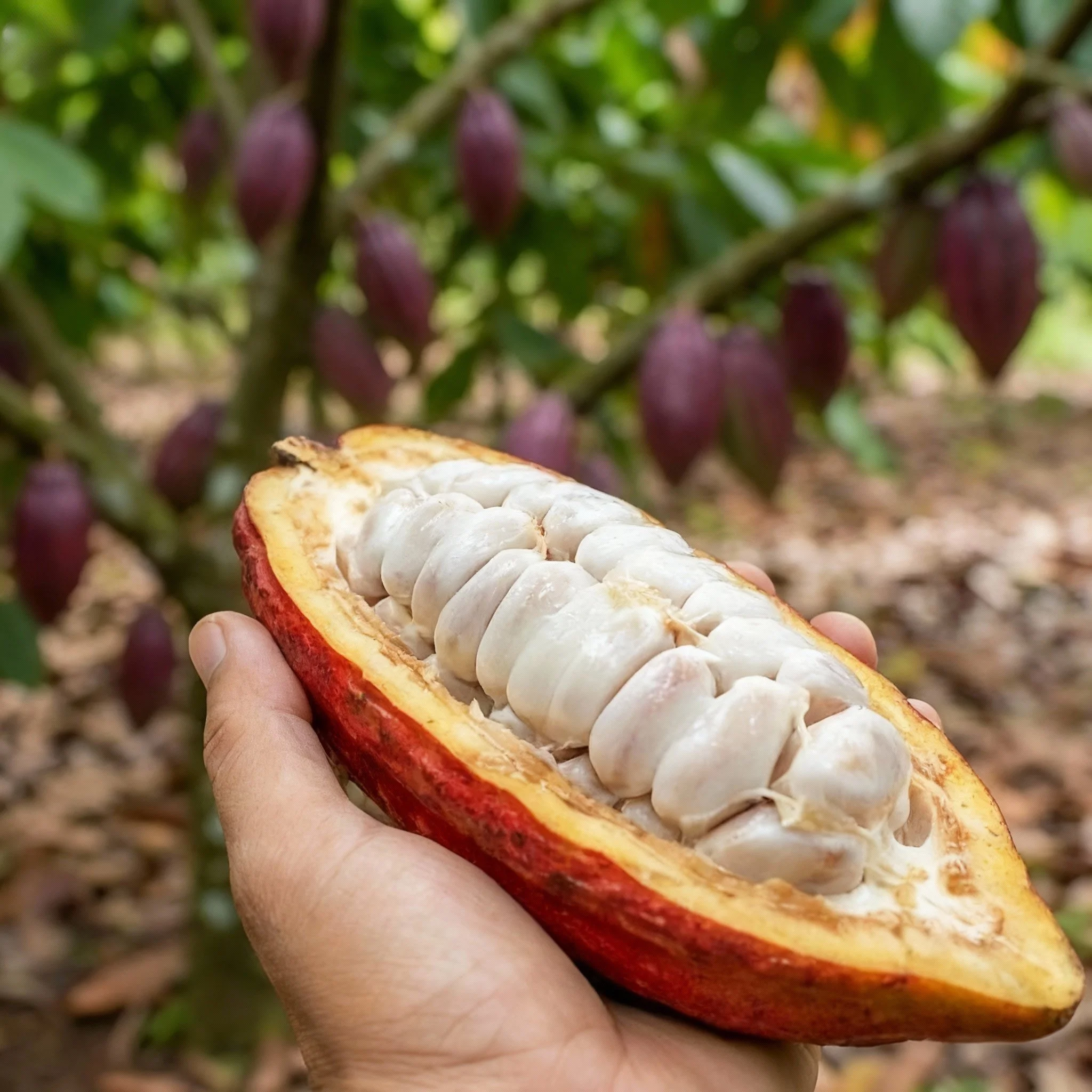
Do you know that the first moments after opening a cacao pod quietly shape the flavor that will emerge weeks later?
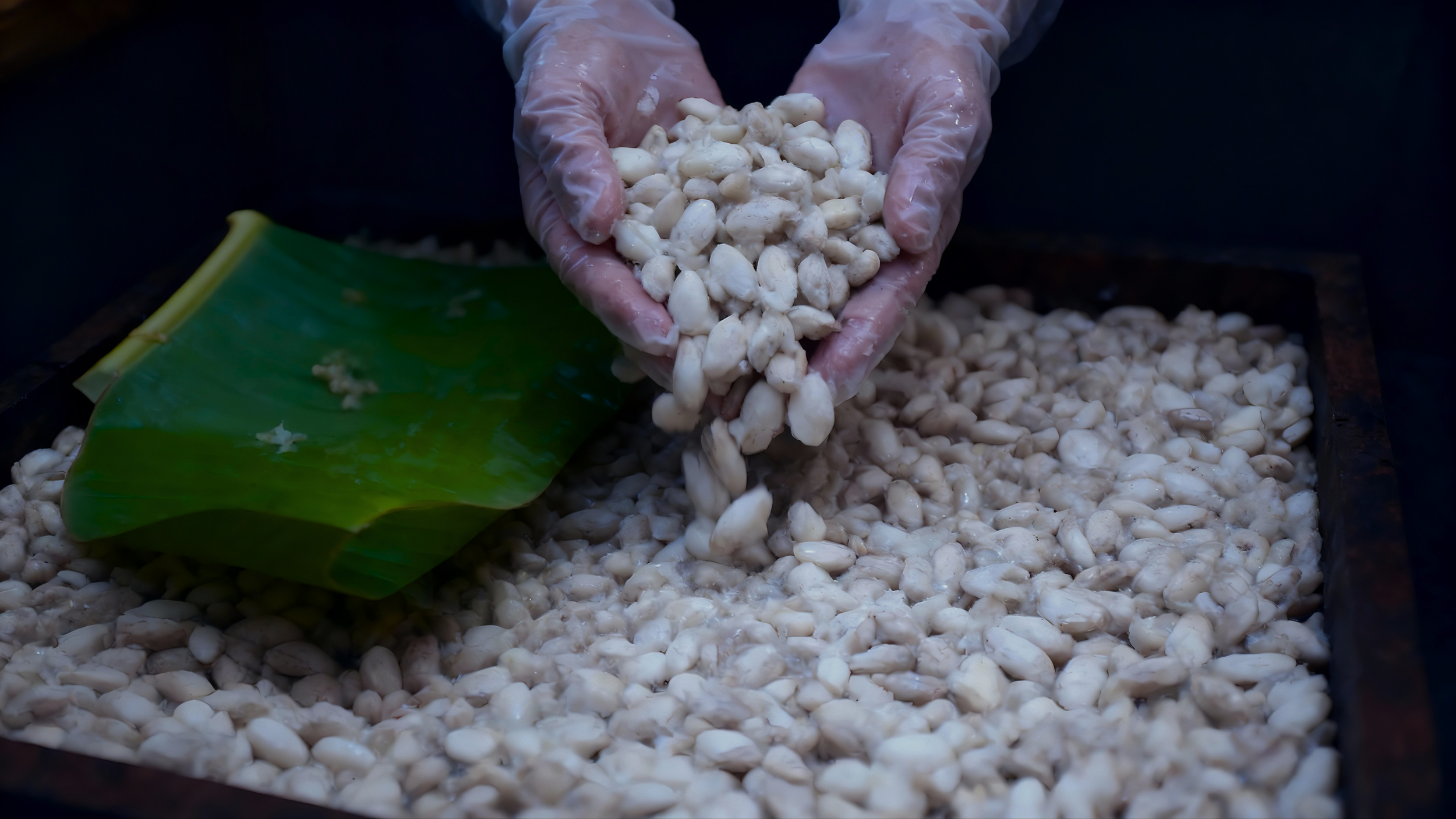
Once the husk splits, natural enzymes in the pulp begin interacting with air and temperature, and this fragile window is where true craft begins. The fresh white pulp releases its first aroma, the earliest signal of the bean’s potential. Our team sorts the seeds immediately while the pulp is still intact, selecting only those that are clean, firm, and naturally moist. No machines, no shortcuts, only trained eyes and instinct refined by years of working with living fruit.
Every seed that continues to the next stage must follow a single rule, it must be alive with potential. Beans that are dull, overly soft, prematurely fermented inside the pod, or carrying internal defects are respectfully removed. At Angkassa, we believe that great cocoa cannot be repaired later, because flaws at the beginning only deepen with time. This early ritual is not just about separation, it is about protection. The hands you see here are not merely harvesting fruit, they are safeguarding the future flavor written inside each bean.
Where Wild Microbes Perform the First Alchemy of CocoaFlavor
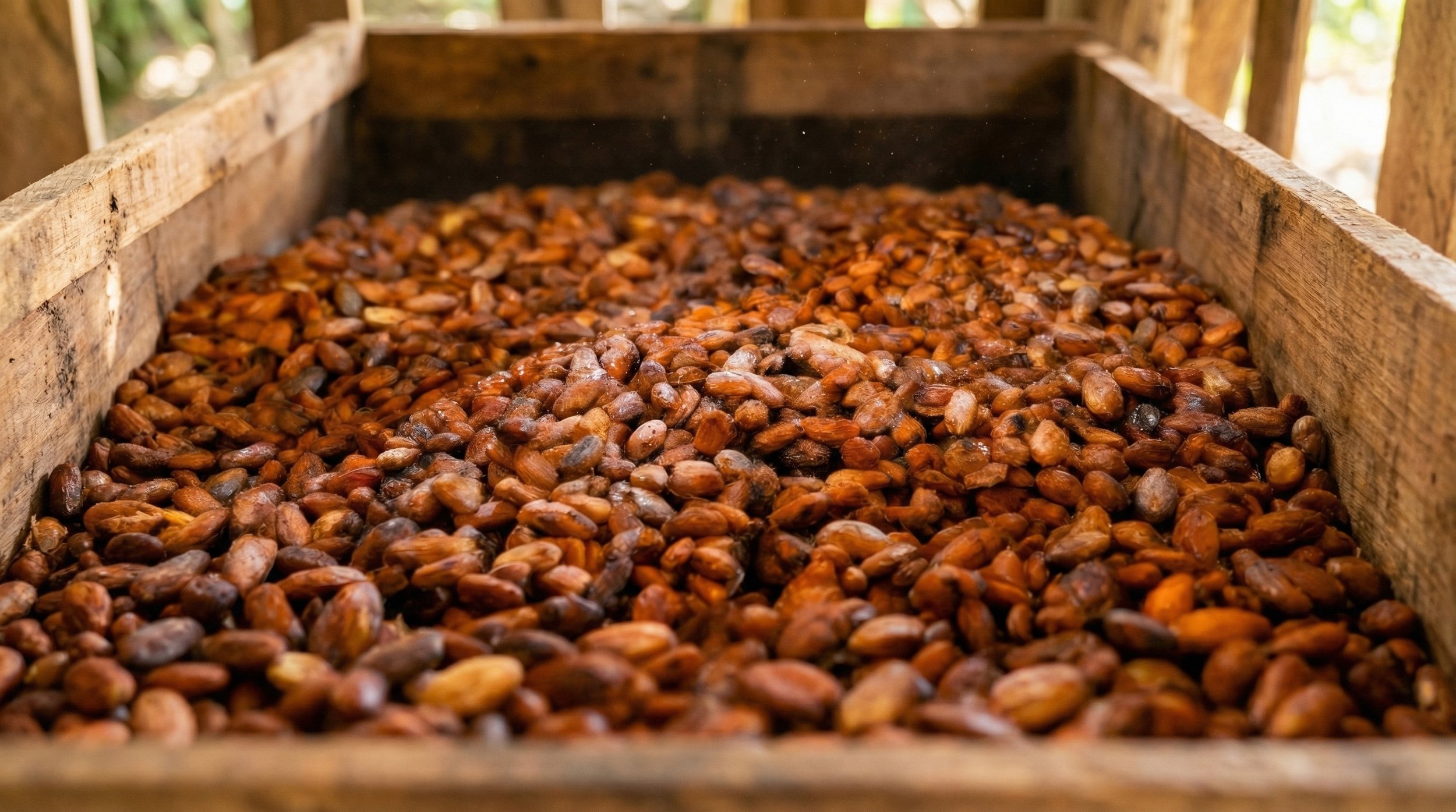
Fermentation is where character is born. In the quiet of our post-harvest stations, beans are layered into wooden boxes, each lined with a single banana leaf. This leaf is not decoration. It protects the beans from excess heat, helps balance moisture, and adds a gentle microbial shield from the forest itself. Even a leaf has a purpose when you're crafting something sacred. We pay attention to every detail, because details shape destiny. Beans are then monitored with discipline and turned at just the right moment. This isn’t automation, this is instinct. In Java, the volcanic soul of the island brings out deep caramel layers and a whisper of smoke. From Waikabubak, the highland humidity unlocks tamarind sharpness, banana cream, and wild nutmeg. Every origin reveals its truth in this sacred stage.
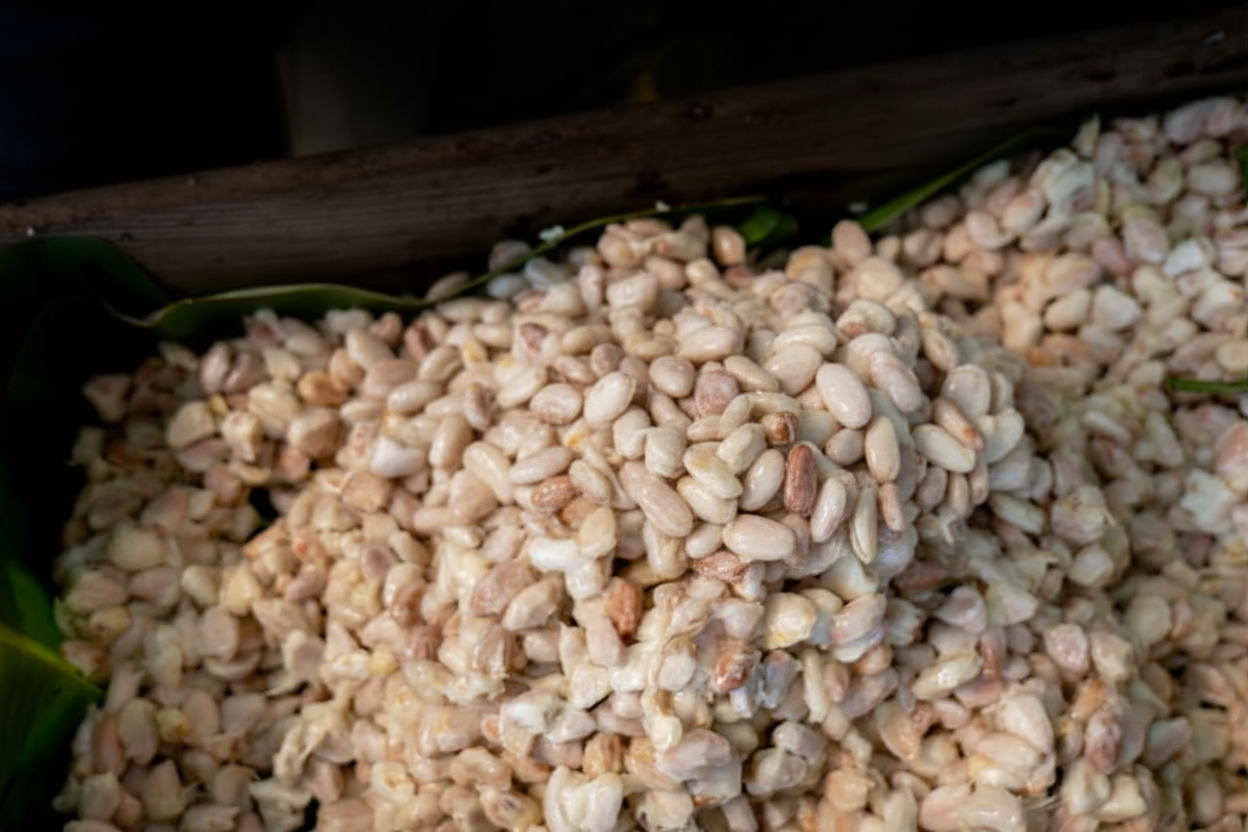
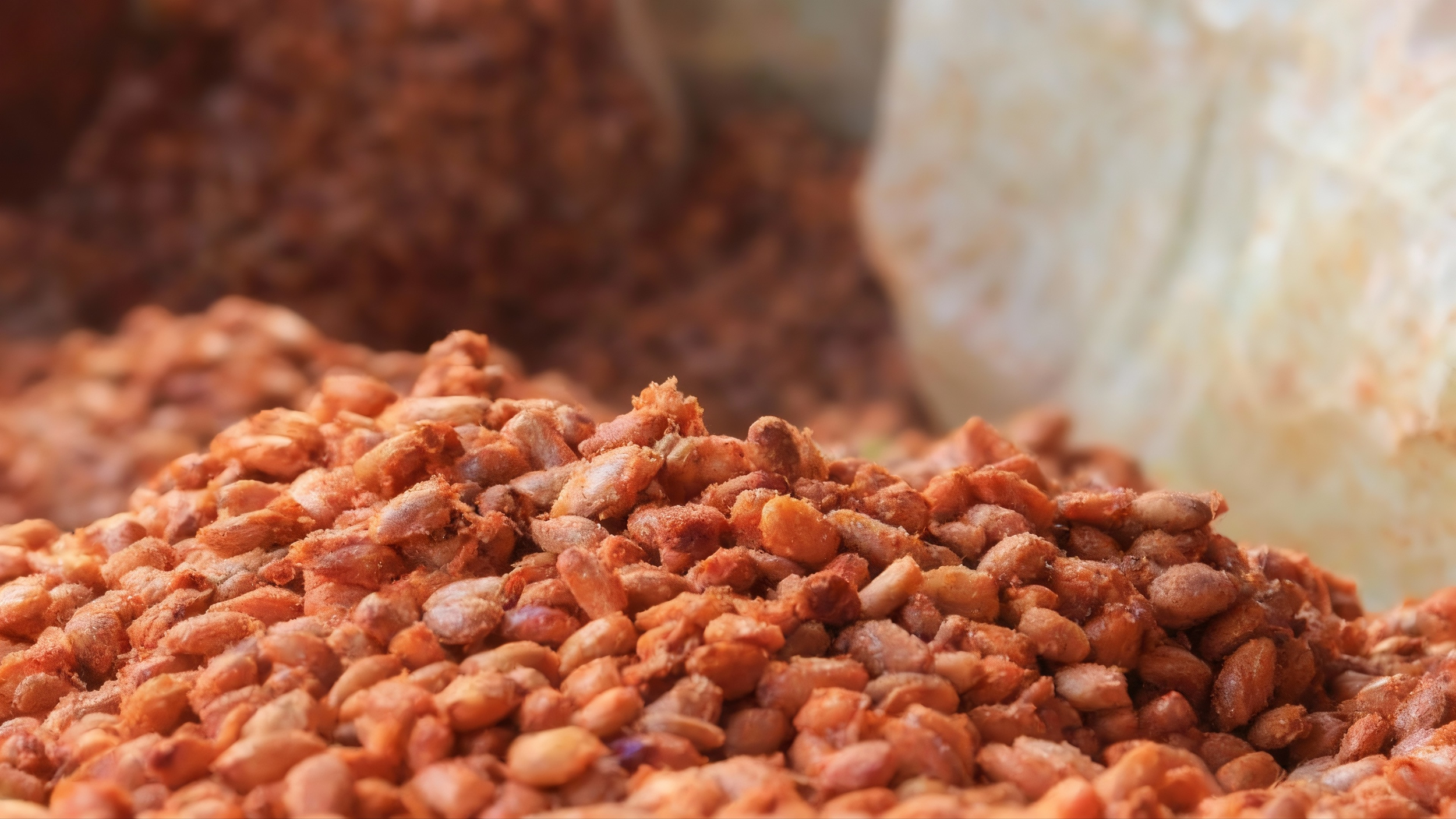
Day One : The Awakening of Heat
Do you know that the first 24 hours decide whether cocoa will develop fruity brightness or collapse into flat bitterness?
Most people never learn this, but the moment the pulp meets oxygen, wild yeasts begin converting sugars into ethanol, and this triggers the very first rise in temperature.
On day one, the box must stay between 30°C to 34°C, no higher, no lower. If it rises too fast, the yeasts die and fermentation stalls. If it stays too low, acidity fails to develop and the final cocoa becomes weak and hollow.
The banana leaf lining isn’t a tradition, it is functional science: it controls moisture evaporation, traps early heat, and creates the perfect micro-anaerobic pocket where yeasts can multiply without stress.
This is also the only day where pH is allowed to remain high, usually between 3.6 to 4.0. Our team checks moisture by touch and sound, because early pulp viscosity tells everything. The seed at this stage is still alive, still tender, still learning its path. Day one is the foundation, and nothing great is built without a foundation that breathes.
Day Two to Four : The Dance of Transformation
Ever wondered why great craft cocoa tastes layered, not linear?
It’s because the middle of fermentation is where complexity is negotiated.
As temperatures rise to 40°C to 48°C, yeasts surrender to lactic-acid bacteria, then to acetic-acid bacteria. This microbial succession is the secret behind flavor depth.
Turning must follow a strict rhythm:
not too early (or yeasts die before finishing),
not too late (or acetic bacteria suffocate).
The box is aerated at the exact hour when ethanol peaks, because introducing oxygen at this moment awakens Acetobacter, the microbe responsible for bright fruit acidity and the warm, signature notes of Indonesian cocoa.
During this period, pH drops to 2.8–3.2, a dangerous but necessary point. The wrong producer panics here, stops fermentation early, and ends with flat, underdeveloped cocoa. But when managed correctly, this sharp acidity slowly softens and infuses the beans with tropical brightness, caramel edges, and terroir-specific tones.
Every origin behaves differently. Java becomes smoky-caramel, Bali turns floral-berry, Sumba sharpens into citrus and apricot. None of this comes from roasting. It happens here, in this microbial ballet.
Day Five : The Birth of Aroma
This is the peak. The pulp is gone. The sugar is gone. What remains is chemistry and destiny.
Temperature settles around 48°C–50°C, and the beans turn from tan to deep burnt umber. This is when the internal embryo dies, a necessary event that unlocks flavor precursors.
Inside the bean, hundreds of biochemical reactions ignite:
• amino acids bind with reducing sugars,
• polyphenols oxidize and mellow,
• bitterness transforms into structured cocoa flavor,
• aroma compounds begin to appear for the very first time.
This is also the day we perform cut-tests, checking embryo death rate, internal browning, and mucilage residues. Any bean that hasn’t fully transformed is removed, because it will never catch up later. Great cocoa is decided here, not at roasting.
Once internal temperature, pH, color uniformity, and aroma all align, the beans graduate from fermentation and step into sunlight. What emerges is no longer fruit, no longer pulp, but the first true expression of chocolate.
Do you know that over 60% of a chocolate's final flavor is determined during fermentation? Even the best beans will fall flat without this precise stage. Every decision in this phase defines the future of our cocoa. Temperature, moisture, airflow, timing, and touch all shape what the bean will become. When done right, it releases something extraordinary. Only after this, do we move forward to transform it into cocoa liquor, butter, and powder. This is not the start of production, it is the birth of identity.
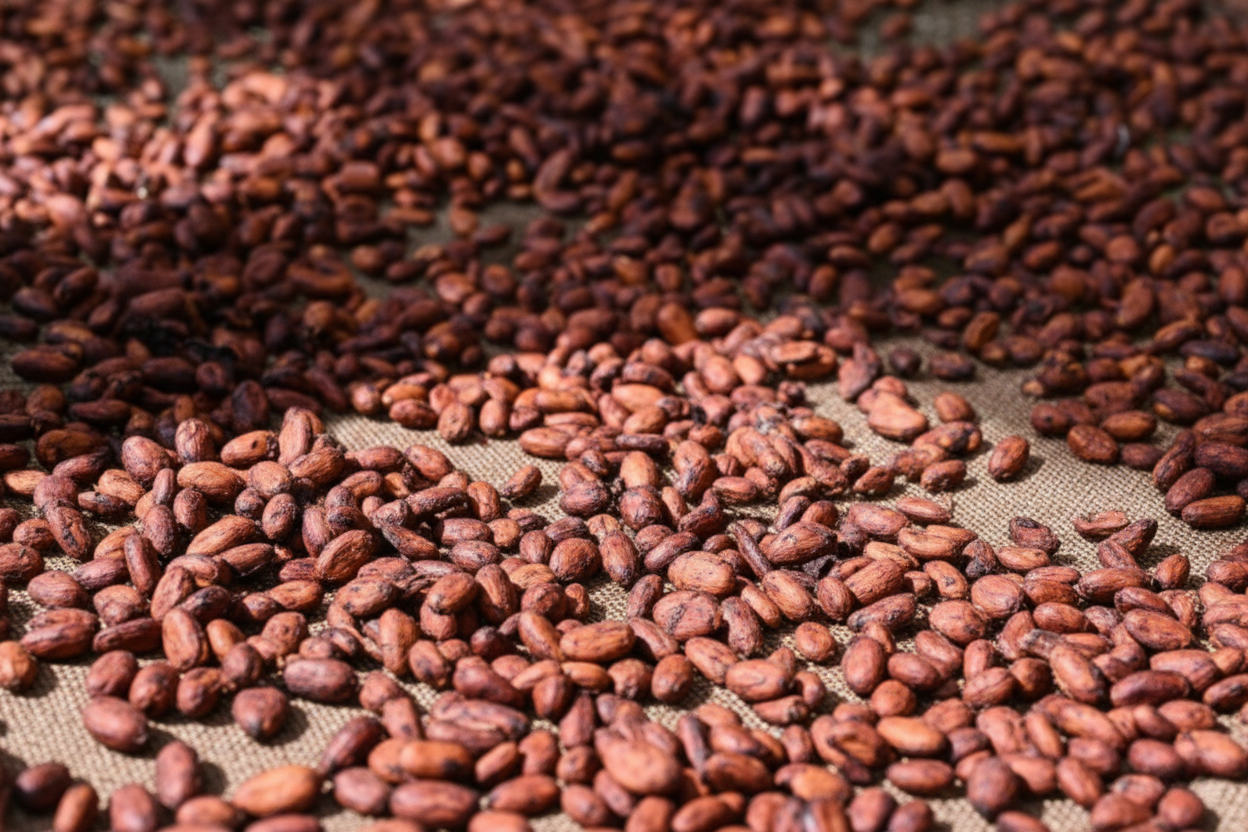
The drying stage is where the bean learns to breathe. Once fermentation is complete, the fruit is carried out into the open air, laid gently across wide drying beds lined with banana leaves or raised wooden tables that keep airflow constant. Here, under the watchful sky, moisture begins its slow retreat. Sunlight firms the structure of each bean, stabilizes the newly born aroma, and locks in the identity shaped during fermentation. This is not a fast process, because speed destroys character. Drying is where the bean gains integrity, resilience, and clarity of flavor.
Drying Ritual : Where Sunlight Finishes What Fermentation Began
Have you ever wondered why true sun drying takes five to six days, sometimes even longer? Cocoa doesn’t dry at the same pace anywhere in Indonesia, because every terroir carries a different sun, a different wind, and a different rhythm of heat. In Java’s volcanic lowlands, the sun is dense and steady, allowing moisture to fall evenly day by day. In Bali, humidity rises in the early afternoon and forces our team to cover the beans at precise moments. In the highlands of East Nusa Tenggara, the wind is sharper, the air drier, and the beans evolve differently. Drying is not a routine, it is a dialogue between climate and craft, a constant negotiation with nature.
Each day, our team turns the beans by hand to ensure even exposure, preventing case hardening and protecting the delicate flavors within. Temperature is measured, texture is observed, and color shifts are read like signs from the earth itself. When the beans finally reach the ideal moisture level, usually around 6 to 7 percent, they have completed their transformation. What was once raw fruit, full of water and pulp, is now stable, fragrant cocoa ready for storage, transport, and the next ritual of roasting. This is the moment where patience becomes reward, where the sun signs its signature onto every origin we carry.
The Moment Fruit Becomes Flavor
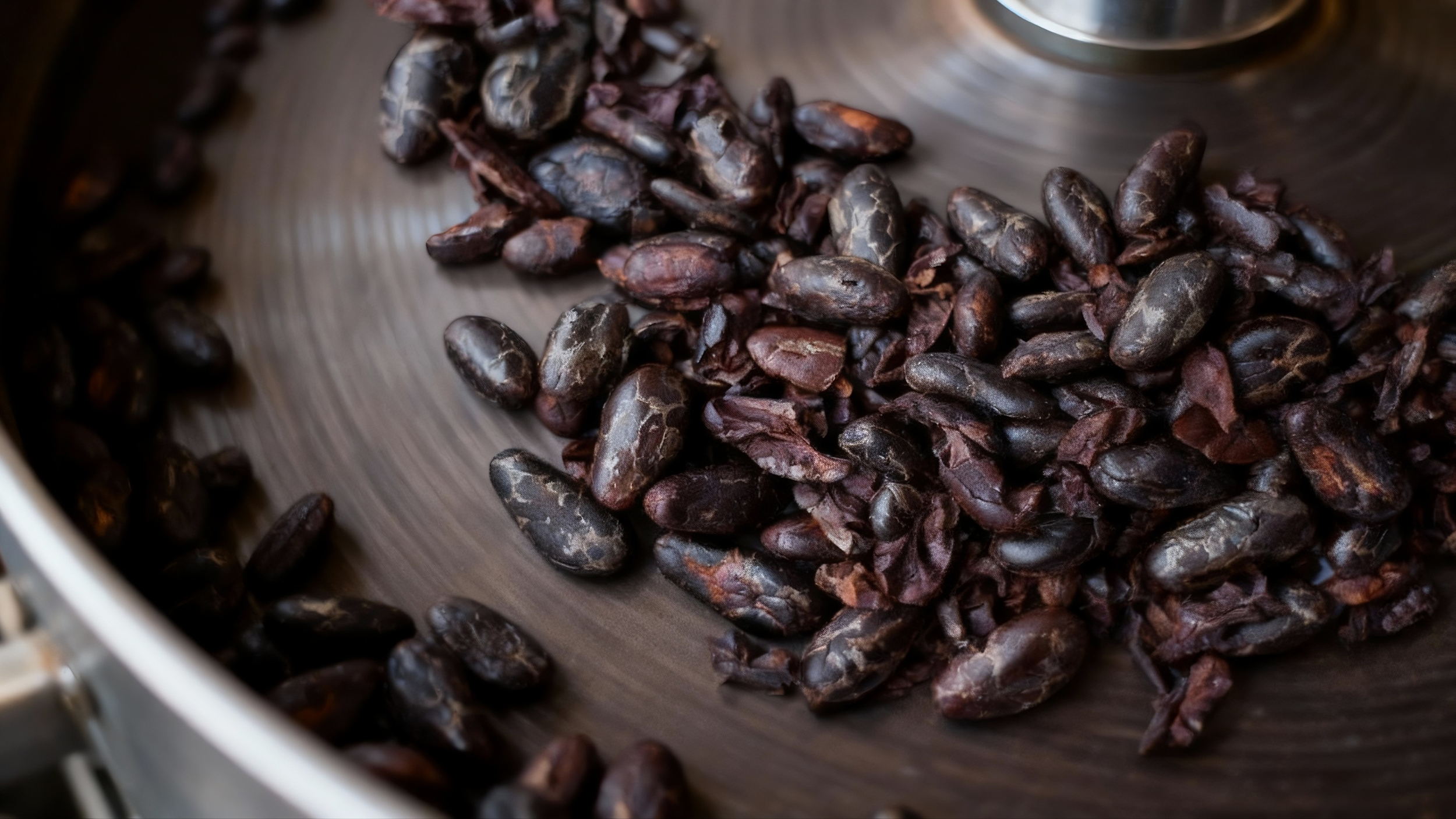
Roasting is the moment when everything we protected in fermentation and drying finally awakens. The beans enter the drum still carrying the memory of their origin, the humidity of their terroir, and the quiet chemistry shaped by wild microbes. Heat is the key that unlocks this identity. As the drum begins its slow rotation, warm air envelopes each bean, coaxing out the hidden sugars and pushing the natural acids into balance. This is not just cooking, it is the ritual that turns raw cocoa into something with a pulse, a voice, and a future. Roasting transforms potential into truth, revealing what the cocoa was always destined to become.
Have you ever wondered how a few degrees of heat can decide whether a cocoa tastes alive or muted forever? Roasting is a dialogue between time, temperature, airflow, and instinct. In Java, we run gentler curves to protect the volcanic caramel tones. In Bali, we allow tropical brightness to shine through a slightly sharper heat. In East Nusa Tenggara, the beans demand a slower rise so their apricot edge remains clean. As the Maillard reaction begins, the aroma shifts from butter and fruit into honey, malt, and warm cacao depth. Every roaster watches color changes like reading a map, knowing that five seconds too long can darken an origin’s soul, and ten seconds too short can leave it unfinished.
Inside the drum, there is a moment when the bean finally speaks. The shell crisps, the nib turns deep brown, and the aroma becomes unmistakable. This is the point where identity locks in place. A good roaster listens with more than senses, watching the rhythm of the beans, reading the fragrance as if it were language. When the curve is complete, the cocoa emerges warm, aromatic, and alive, ready for the next transformation into cocoa liquor. Roasting is not a step, it is a ceremony, the final act that honors everything the farmers, the microbes, the sun, and the land have given. This is where flavor becomes destiny.
The Cracking of the Bean Is the Moment Its Soul Steps Forward
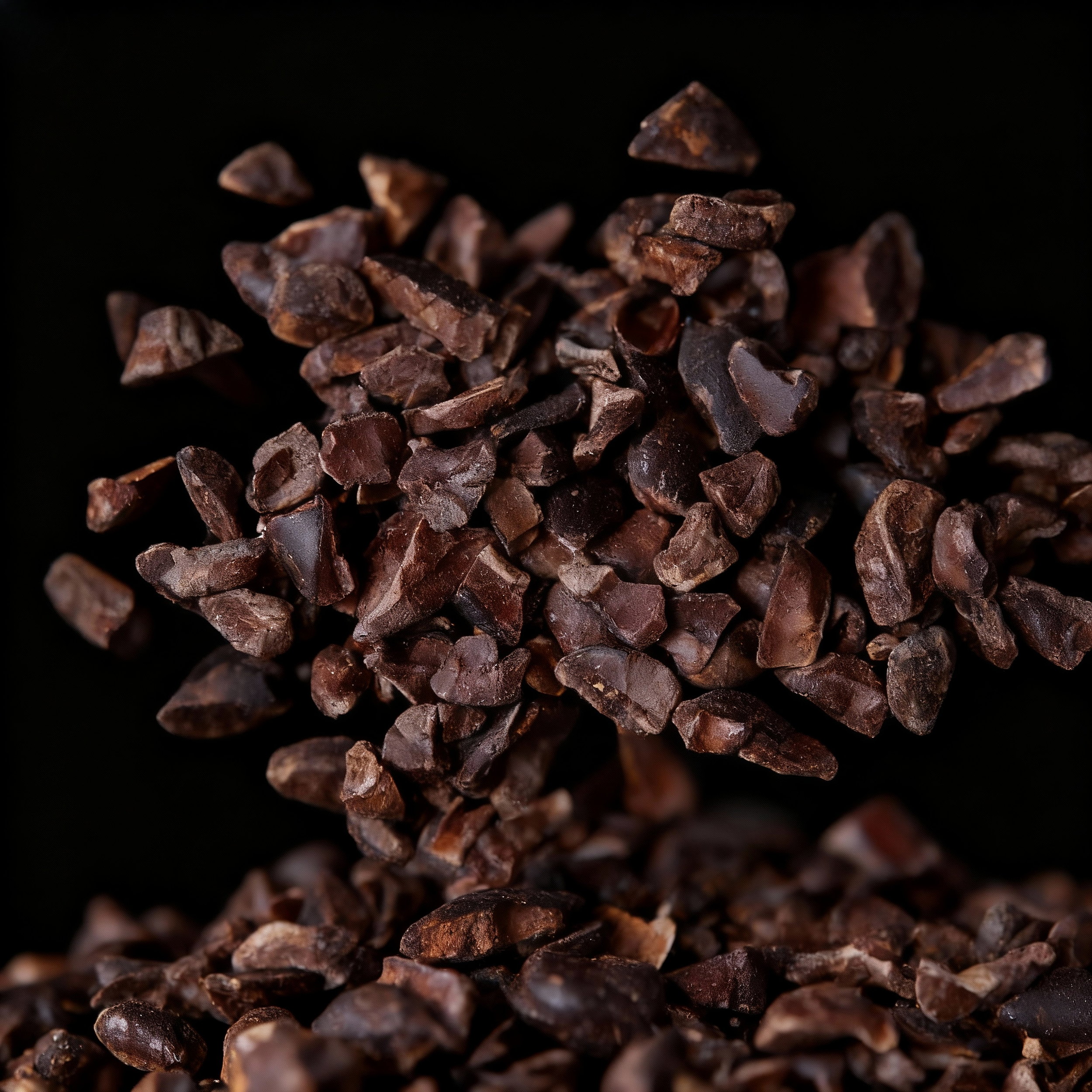
The moment the roasted bean cracks is the moment its soul steps forward.
After the slow rise of heat in the roaster, each bean holds tension inside, a quiet pressure shaped by its origin, its terroir, and its unique fermentation path. Cracking is the release. The shell fractures with a dry whisper, revealing the warm, fragrant nib inside, the part that carries aroma, texture, and the future character of chocolate. This is the first time the cocoa shows its true heart, and our craft is to honor that moment.
But how do you separate purity from what no longer serves the flavor?
This is where precision becomes everything. Cracking must produce fragments that are neither too fine nor too coarse, because the size of each piece determines how cleanly the husk can be removed. In winnowing, airflow is tuned like an instrument, gently lifting away the light shells while keeping the heavier nibs grounded. A change in humidity, wind pressure, or bean size can shift the entire balance, and our team adjusts these details by hand. Clean nibs are not the result of machinery, they are the result of attention.
What remains after winnowing is the essence of cocoa, pure and uncompromised.
The husk is gone, the impurities removed, leaving behind nibs that carry the full memory of fermentation, drying, and roasting. Every origin expresses itself differently at this stage: Java’s volcanic intensity, Bali’s fruit brightness, East Nusa Tenggara’s sharp highland edge, Aceh’s earthy tradition. These nibs are the foundation of cocoa liquor, the moment where potential turns into promise. From here, the journey moves forward, but the heart of the cocoa has finally been revealed.
Where Solid Turns Into Spirit
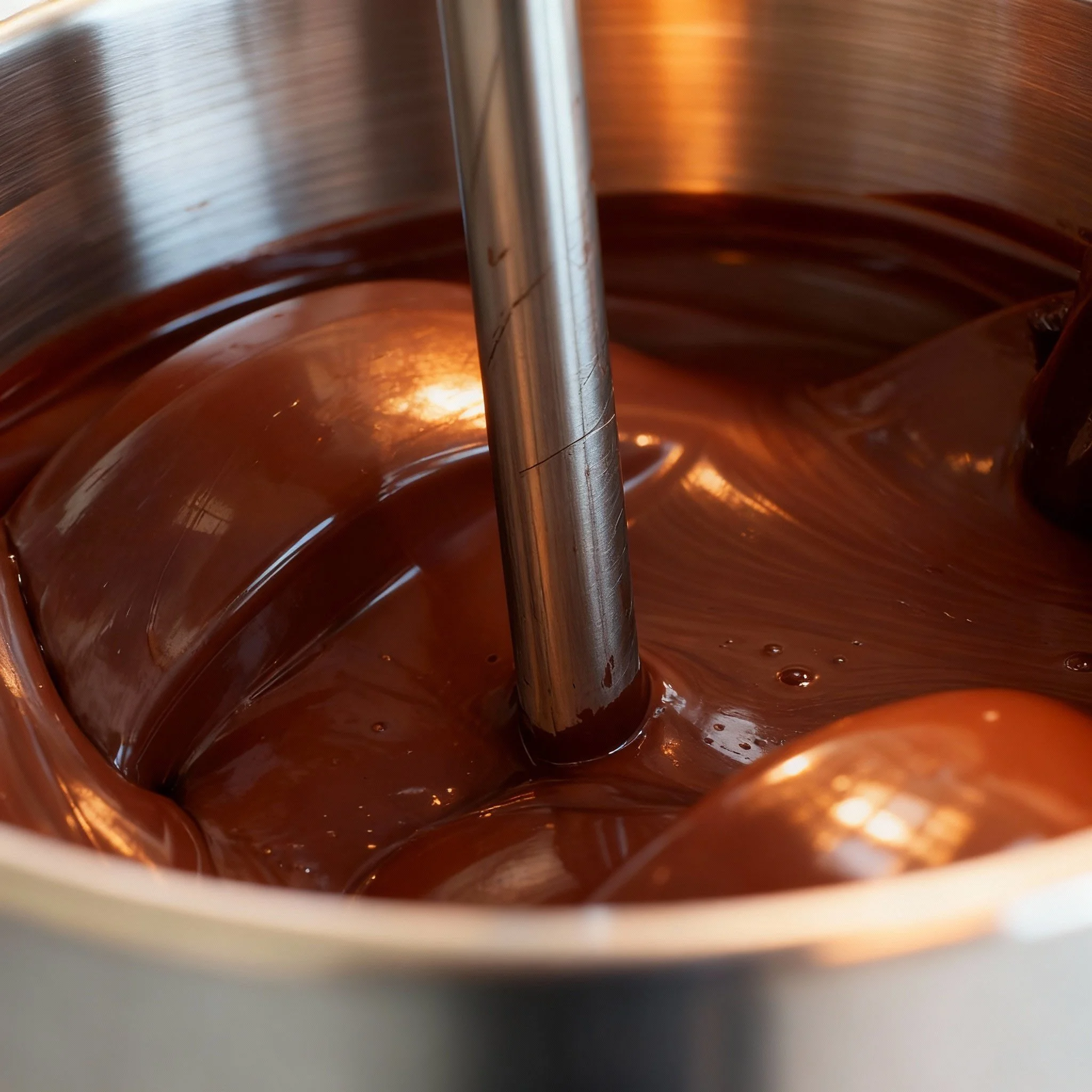
Grinding is the moment where cocoa truly awakens, the instant when solid nibs surrender their form and melt into a warm, living paste. Heat, friction, and movement collide, releasing aromas that have been waiting since fermentation. What starts as rough fragments begins to flow, slowly revealing the identity of each origin, from volcanic Java’s deep caramel tones to East Nusa Tenggara’s bright citrus spark. This phase is not mechanical, it is a transformation, a quiet ignition of flavor.
The Slow Refinement That Shapes Flavor
Do you know that particle size alone can decide whether a chocolate feels luxurious or grainy on the tongue? During grinding, every minute matters. The stones rotate hour after hour, reducing each particle to below 25 microns until the bitterness softens and the acidity balances. Too much heat and the liquor becomes harsh, too little and the viscosity becomes uneven. Each origin behaves differently under the stone, demanding patience, intuition, and constant listening to the rhythm of the paste. This is craftsmanship that cannot be rushed.
The Birth of True Cocoa Liquor
After long hours of refining, the paste evolves into a glossy, fluid mass with a fragrance that fills the room, thick with notes of the land where it was grown. This is cocoa liquor, the pure essence of the bean before it becomes butter or powder. It carries depth, memory, and terroir, ready to be pressed or transformed depending on what the maker seeks to create. In this moment, the soul of the cacao stands revealed, honest and unfiltered.
Pressing : Where Butter Finds Its Purity

Cocoa liquor enters the press still carrying the full memory of fermentation, drying, roasting, and grinding. Under controlled pressure, the warm paste slowly releases its golden essence, separating into pure cocoa butter and the solid cake that will later become powder. This is not extraction, it is refinement, the moment when flavor and structure part ways with incredible precision. Temperature is kept stable to preserve aromatic compounds, because a few degrees too high can mute the very notes that make Indonesian origins so distinct.
Have you ever wondered how a fat can define the texture of an entire chocolate? Cocoa butter is the silent architect behind snap, sheen, and melt. During pressing, we monitor the viscosity, the flow rate, and the purity of the fat as it emerges. Each origin behaves differently, with Java’s butter carrying volcanic warmth, Bali’s showing floral brightness, and East Nusa Tenggara revealing citrus-sweet undertones. What exits the press is not just fat, it is the soul of the bean in its most elegant form.
The final result is a butter that sets Angkassa apart, clean and aromatic, filtered without shortcuts. No deodorization, no chemical processing, no compromise. This is cocoa butter shaped by artisans, carrying the identity of the land, ready to become chocolate, cosmetics, or culinary craft. Purity is not a marketing term here, it is a discipline.
Cocoa Powder : The Final Gift of the Bean
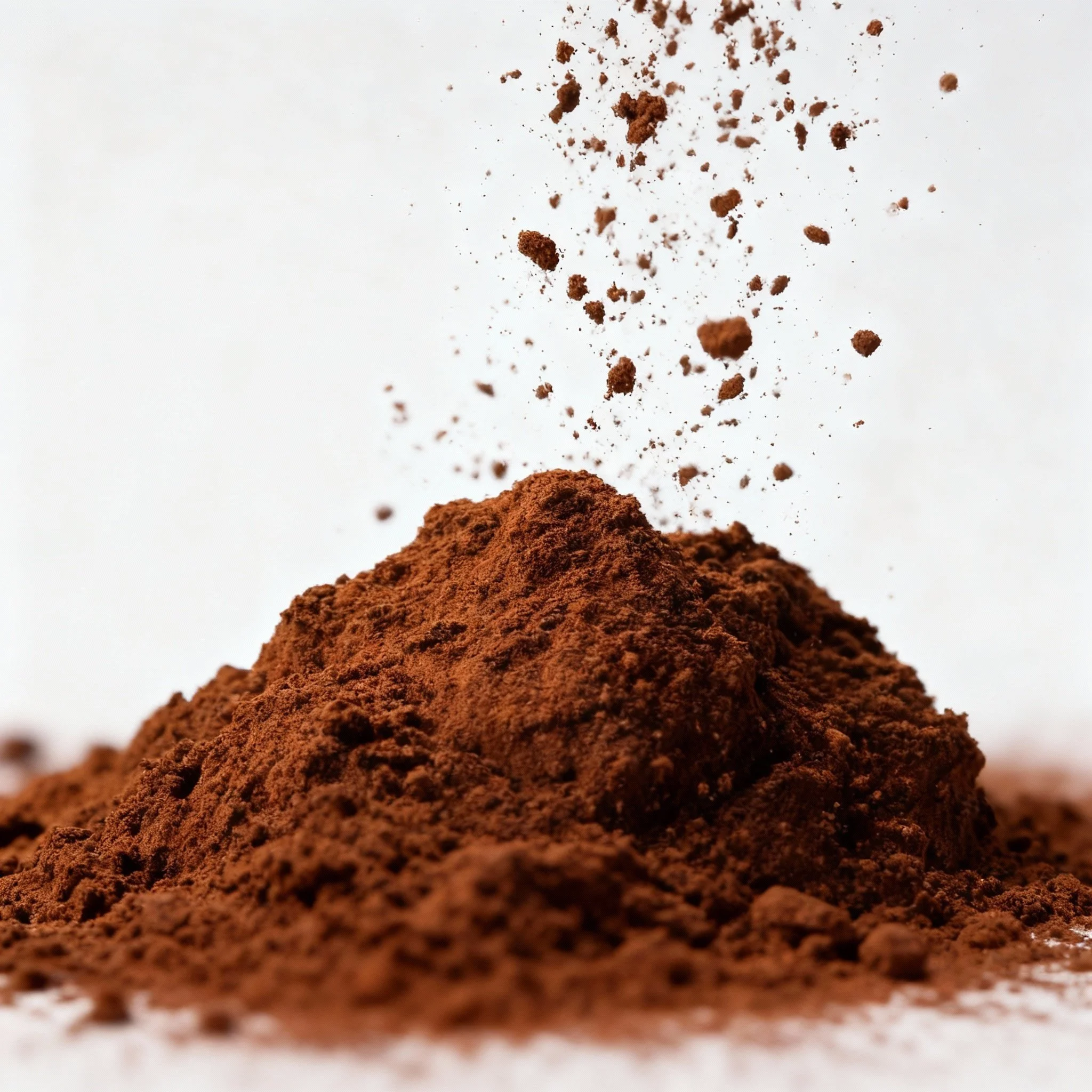
Cocoa powder is born only after the butter has surrendered, leaving behind a dense cocoa cake that still carries the full soul of its origin. At Angkassa, this cake is never rushed. It is cooled slowly so the volatile aromatics stay intact, then broken down with granite stones that turn in a controlled rhythm, protecting the natural sugars from scorching. The goal here is not fineness alone, but fidelity to the land. Java’s caramel smoke, Bali’s floral glow, East Nusa Tenggara’s bright apricot, Aceh’s nutty depth, Kalimantan’s rummy warmth, all remain alive inside the cocoa matrix. Every motion in this stage respects the fruit that came before it, honoring the story it carries.
Do you know what separates premium cocoa powder from the rest of the world? It is the discipline to balance fat content, particle size, and aromatic retention without letting any one element overpower the others. Too fine and the powder suffocates, too coarse and the flavor leaks away. Our powder is refined to the ideal window of 180 to 220 mesh, a range where acidity softens, fruit notes stay bright, and chocolate tones rise warm and round. This level of precision demands hand checking because powder does not forgive mistakes, it reveals them. When you open a bag of Angkassa cocoa powder, the aroma should lift naturally, without sharp edges, without bitterness, only clarity.
After refinement, every batch moves to sifting rooms where the powder is aerated to remove micro clumps and release trapped moisture. This step looks simple, but it decides how evenly the powder will dissolve in hot milk, cold water, ceremonial brews, or barista style concoctions. Industrial blends often use alkaline agents to force solubility, flattening the origin’s character. Angkassa refuses shortcuts. We rely on purity, natural acidity balance, and a precise fat ratio that allows the powder to bloom the moment it touches heat. When brewed, it should perfume the room gently, rising like warm fruit, roasted nuts, and soft chocolate wrapped together.
What remains after all this care is not just cocoa powder, it is the final gift of the cacao fruit, the last chapter of its journey. This is the form that accompanies everyday rituals, morning cups, midnight creations, ceremonial gatherings. It dissolves cleanly, it coats the palate with honesty, and it preserves the full identity of single origin cocoa rather than the washed out profile of generic blends. In this powder, the terroir stands proud, and the memory of the bean remains whole. This is the companion that turns simple drinks into moments, simple recipes into celebrations, and simple days into something worth savoring.